The EU Environmental Noise Directive requires all European manufacturers to reduce industrial noise and create mitigation action plans. 2025-2026 enforcement is stricter than ever. Germany, Netherlands, and Poland have different compliance limits. Factories failing to meet standards face fines and operational shutdowns. Modern exhaust silencers, steam vent silencers, and acoustic engineering help facilities meet regulations while maintaining production efficiency.
Europe’s noise regulations just got tougher. If you run a factory, chemical plant, or logistics facility in Germany, Netherlands, France, Poland, or anywhere else in the EU, you need to pay attention.
The Environmental Noise Directive (END) is not new. But 2025-2026 enforcement is different. Member states are getting serious about compliance. Fines are real. Operational restrictions happen. This guide explains what the END actually requires and how to stay compliant.
What the Directive Actually Requires
The EU Environmental Noise Directive requires every member state to:
- Create noise maps showing sound levels around industrial facilities.
- Identify exposed populations (over 55 dB during day, 45 dB at night).
- Develop action plans reducing noise pollution.
- Monitor and report progress to the EU.
Member State Variations Matter
Germany
Germany has Europe’s largest industrial noise control market. Rules are strictly enforced. Industrial zones allow 65–70 dB in daytime. Mixed residential areas allow 50–60 dB. Smart manufacturing is a key focus. Old plants usually must be upgraded.
Netherlands
The Netherlands has very strict noise limits. Industrial areas are limited to 60–65 dB. Residential areas to 40–50 dB. Ports and chemical sites need advanced silencers. Older systems often fail compliance.
Poland
Poland is more flexible than Western Europe. Industrial zones allow 70–75 dB. Residential areas 55–65 dB. Rules are tightening for new projects.
France
France has regional noise rules. Urban areas: 55 dB day, 45 dB night. Industrial zones: around 70 dB. Night limits are strict, so 24/7 work needs strong control.
Real Consequences in 2025
Enforcement became real in 2024-2025. The EU Commission published detailed noise pollution data. Over 20% of Europeans are exposed to harmful noise levels.
That means fines. Operational shutdowns. Permit revocations. A chemical plant near Cologne was shut down for 6 weeks because they couldn’t prove noise compliance. They lost millions in revenue while installing proper exhaust silencers and acoustic enclosures.
Why Standards Shift
Noise violations typically happen because:
- Equipment ages: Original silencers deteriorate. Effectiveness drops.
- Operations expand: You add machinery. Total noise exceeds limits.
- Standards tighten: Yesterday’s compliance becomes today’s violation.
- Maintenance lapses: Acoustic materials degrade unnoticed.
How Modern Silencers Help
Exhaust Gas Silencers reduce primary noise sources using reactive and absorptive technology.
Steam Vent Silencers handle high-pressure releases without back-pressure issues.
Air Intake Silencers address secondary noise sources often overlooked by facility managers.
Acoustic Enclosures provide 15-20 dB reduction for heavy machinery.
Case Study: High-Performance Noise Reduction for a Slovakian Power Plant
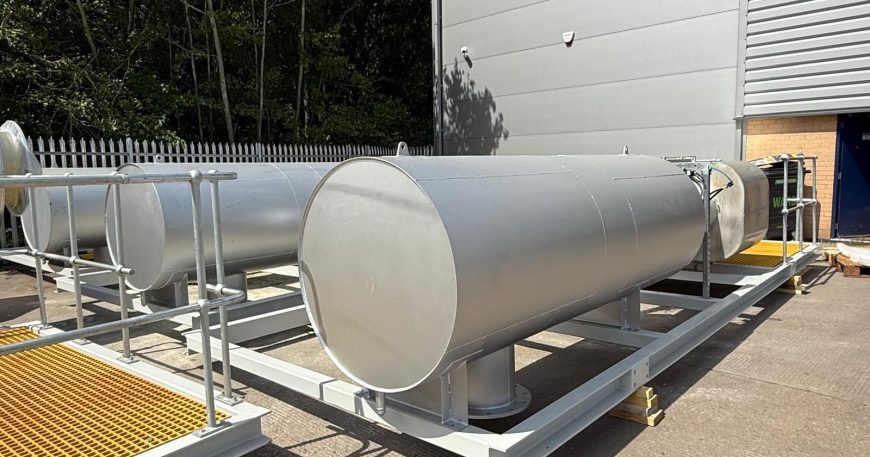
In Slovakia, four gas turbine exhaust silencers were installed at a power plant to reduce high-frequency noise. The system uses acoustic absorption to cut exhaust noise while maintaining efficient turbine performance and low back pressure.
Ready to Ensure Compliance?
Industrial and Marine Silencers help European facilities meet Environmental Noise Directive standards across Germany, Netherlands, France, Poland, Belgium, and beyond.We understand member state variations. We’ve installed exhaust gas silencers, steam vent silencers, and acoustic systems meeting Germany’s strict standards and optimising operations in more flexible regions. Get your noise compliance assessed today. Contact Industrial and Marine Silencers Ltd.