Diesel and gas engines produce nitrogen oxides (NOx) as a by-product of combustion. NOx harms air quality and is now tightly controlled by UK and EU emissions law. SCR systems are the main technology sites use to bring NOx levels down and stay compliant.
What Is an SCR System?
SCR stands for Selective Catalytic Reduction. It is fitted to an engine’s exhaust line to treat NOx before it leaves the site. A urea-based fluid, often called AdBlue or DEF, is injected into the hot exhaust gas. This reacts with the NOx over a catalyst, turning it into nitrogen and water vapour, both harmless. The result is exhaust gas that is far cleaner than untreated exhaust.
Why Sites Need SCR Technology
The Medium Combustion Plant Directive (MCPD) sets strict NOx limits for diesel-powered engines in the UK. IMSeco SCR technology meets this directive and can be retrofitted onto existing power generation equipment, so sites do not need to replace their generators to stay compliant. Sites in the UK Demand Side Response (DSR) Capacity Market also need to meet Tranche A and Tranche B requirements, and SCR retrofitting supports this too.
How Much NOx Reduction Can Be Achieved?
IMSeco standard SCR systems cut NOx emissions by around 95%, bringing output well below the DEFRA threshold of 190 mg/Nm3 at 15% O2, reached within 10 to 20 minutes of start-up. For sites that need even higher performance, the IMSeco Airless SCR system reaches up to 98% NOx reduction. It uses a high-pressure dosing system instead of compressed air, making it more compact and reliable, especially for retrofit projects with limited space.
What’s Inside an SCR System
An SCR system is built from a few key parts working together:
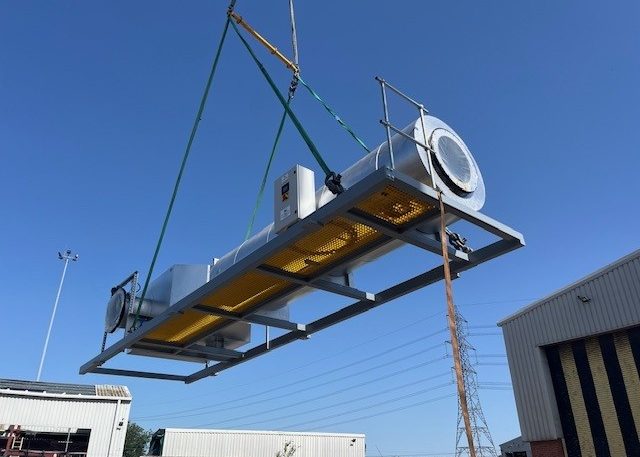
- SCR Catalysts housed in a stainless-steel modular reactor
- Urea tanks, supplied as plastic bunded units or bespoke metal bunded tanks
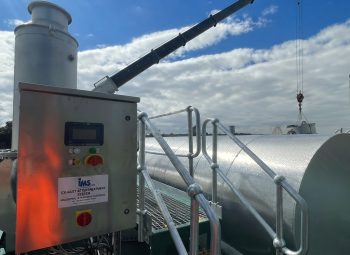
- An Electronic Control Unit (ECU) that monitors exhaust temperature, gas volume, backpressure, and NOx levels before and after the catalyst
- Sensors that calculate the exact amount of urea to inject at the right moment
The ECU also stores real-time NOx data on a memory chip. This data can be downloaded through Windows-friendly software, either manually or through a telematics package, giving sites clear proof of the reductions being achieved.
Frequently Asked Questions
What does an SCR system do? It reduces NOx emissions in engine exhaust by injecting a urea-based fluid that reacts with NOx over a catalyst, producing nitrogen and water vapour.
How much NOx can an SCR system remove? IMSeco standard SCR systems remove around 95% of NOx. The Airless SCR system removes up to 98%.
Can SCR systems be fitted to existing generators? Yes. IMSeco SCR technology is designed to be retrofitted to existing power generation equipment, supporting MCPD and DSR Capacity Market compliance.
What fluid does an SCR system use? A urea-based solution, commonly known as AdBlue or DEF, is used to trigger the NOx reduction reaction
NOx regulation is not going away, and engines that ran without treatment a few years ago now need a clear compliance plan. SCR technology gives sites a proven way to meet that requirement without replacing existing generators. The choice between a standard SCR system and the Airless SCR design usually comes down to available space, retrofit conditions, and the NOx reduction target a site needs to hit. For facilities already managing noise limits, pairing SCR with acoustic silencers on one framework keeps the project simple. The right SCR setup should always match the engine, the site, and the regulation driving the project. Contact Industrial & Marine Silencers to find the right SCR configuration for your engine and site.