Data centres are evolving rapidly to keep up with growing digital demands—from cloud computing and AI to streaming services and connected devices. As our world becomes more connected, the future of data centres will focus on more power, greater efficiency, and lower environmental impact.
Here’s an overview of the key trends that are shaping the future of data centres:
1. Sustainability & Energy Efficiency
- Green Energy: Many data centres are switching to renewable energy sources like wind and solar to cut carbon emissions and reduce reliance on fossil fuels.
- Smart Cooling: New cooling systems, such as liquid cooling and AI-controlled solutions, are being used to reduce energy use and waste.
- Modular Design: Modular data centres are built in smaller, scalable units, making them easier to expand while saving space, energy, and resources.
2. Edge Computing
- Closer to Users: Edge data centres are located near where data is generated, reducing lag and speeding up services—ideal for technologies like self-driving cars and real-time AI.
- Faster Response: By processing data locally, edge computing improves performance and user experience.
- Flexible Scaling: Resources can be added or reduced as needed, making it easier to handle changing demands.
3. Artificial Intelligence (AI)
- Operational Efficiency: AI helps manage resources, improve cooling efficiency, and automate routine tasks in data centres.
- Powerful Hardware: AI applications require high-performance computing, driving innovation in hardware design.
- Smarter Security: AI tools are also being used to detect threats, monitor systems, and protect against cyberattacks.
4. Security
- Layered Protection: Data centres are using a mix of encryption, firewalls, and threat detection systems to stay secure.
- Routine Checks: Regular audits help identify weak points and ensure systems stay protected.
- Data Privacy: Staying compliant with data privacy laws is essential for maintaining customer trust.
5. Emerging Technologies
- Quantum Computing: Although still developing, quantum computing could transform how data centres handle complex processing tasks in the future.
- Hybrid Cloud: Businesses are using a mix of public and private cloud services to get the best of both flexibility and control.
- Digital Twins: These are virtual models of real data centres, helping operators test and optimise systems before making real-world changes.
Addressing a Key Challenge: Cleaner Backup Power
While data centres are pushing toward greener operations, many still rely on diesel generators for backup during power outages. These generators are vital for preventing data loss—but they also produce harmful emissions.
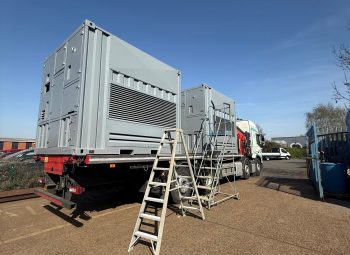
That’s where 𝗜𝗠𝗦𝗲𝗰𝗼 𝗦𝗖𝗥 𝗧𝗲𝗰𝗵𝗻𝗼𝗹𝗼𝗴𝘆 comes in. Our advanced systems reduce nitrogen oxide (NOx) emissions by up to 98%. Delivered on skids for fast setup, these ‘Airless’ modular systems come with custom-built exhaust silencers and are pre-wired for quick installation and commissioning.